Nicosia
Nicosia (Lefkosia) is the inland capital: a walled old town with Venetian ramparts, the pedestrian Ledra Street and the Cyprus Museum's leading archaeology collection.
Nicosia
Nicosia (Lefkosia) is the inland capital: a walled old town with Venetian ramparts, the pedestrian Ledra Street and the Cyprus Museum's leading archaeology collection.
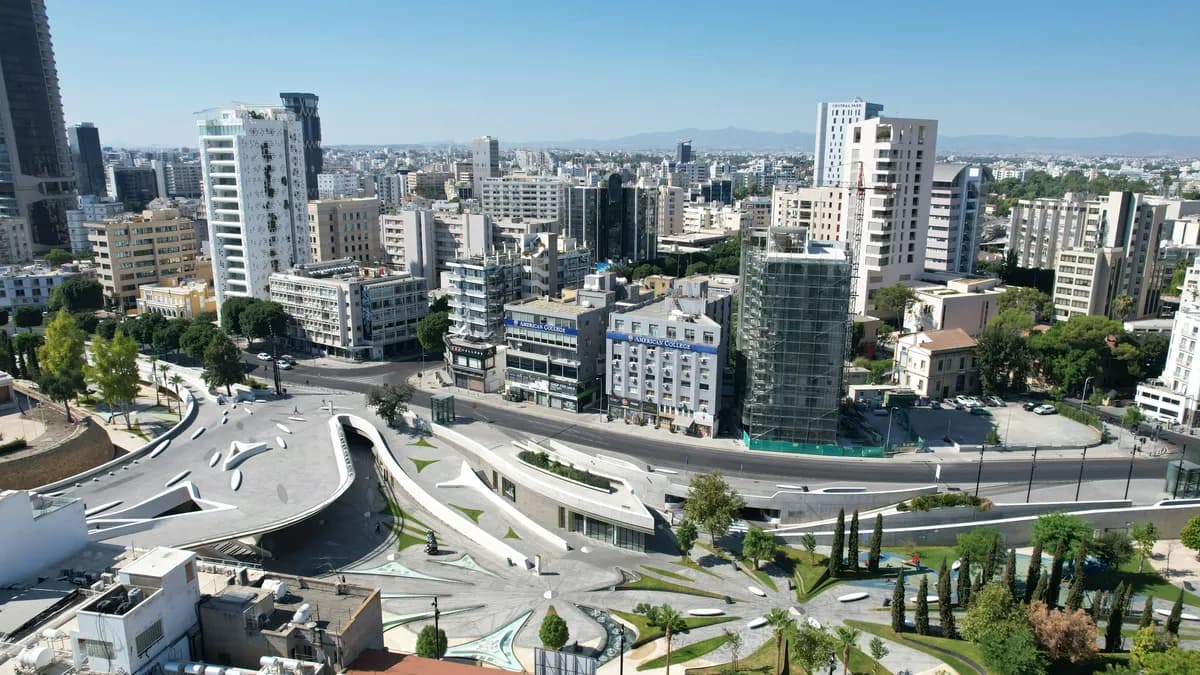
Nicosia (Lefkosia) is the capital of Cyprus and the only major city on the island that sits inland, on the central Mesaoria plain. Its old town is enclosed by a star-shaped ring of Venetian walls built in the 16th century, and inside them a grid of narrow lanes holds churches, museums, craft workshops and cafes. This guide covers the south side, the part of the city within the Republic of Cyprus.
The main artery is the pedestrian Ledra Street, lined with shops and cafes, which runs through the heart of the old town. Just off it stand restored Ottoman and medieval buildings, including the Faneromeni church and the lanes of the Laiki Geitonia quarter. The Cyprus Museum stands just outside the walled centre, the island's leading archaeology collection, with finds spanning the Neolithic to the Roman era.
What to do
- Walk Ledra Street and the lanes of the old town inside the Venetian walls.
- See the island's top archaeology at the Cyprus Museum.
- Visit the cathedral of Saint John and the Byzantine museum in the Archbishopric quarter.
- Browse shops near Faneromeni square.
Nicosia is a working capital rather than a beach town, so it suits a day or two of history, museums and food rather than a full holiday. It is also the only divided capital in Europe, with the buffer zone running through the centre; the south side covered here is fully part of the Republic and easy to explore on foot.
The city sits about an hour inland from Larnaca and Limassol, which makes it an easy day trip from either coast. The painted churches and villages of the Troodos Mountains begin to climb to the southwest, including the hilltop Kykkos Monastery.
Practical information
Photo gallery
Top attractions
Where to eat
Where to stay
Amyth of Nicosia
★★★★A restored early 20th-century mansion turned boutique hotel inside the Venetian walls of the old town, part of Marriott's Design Hotels collection.
NEX Hostel
A modern, centrally located hostel with shared dorms and private rooms, a rooftop terrace, and a strong reputation for cleanliness and hospitality.
Nicosia questions
What is there to see in Nicosia?
+
Nicosia's old town sits inside a ring of 16th-century Venetian walls and holds the pedestrian Ledra Street, historic churches and craft quarters; the Cyprus Museum is just outside the walls, the island's leading archaeology collection. As the inland capital it is strong on history, museums and food rather than beaches.
Is Nicosia worth visiting on a beach holiday?
+
Nicosia is a working capital without beaches, so it is best as a day trip or short stay focused on history and culture. It sits about an hour inland from Larnaca and Limassol, which makes it an easy day out from either coast for travellers who want a change from the beach.
Why is Nicosia called a divided capital?
+
Nicosia is the only divided capital in Europe, with a UN buffer zone running through the centre. This guide covers the south side, which is fully part of the Republic of Cyprus and easy to explore on foot. The walled old town, Ledra Street and the main museums are all on the southern side.
What is the Cyprus Museum?
+
The Cyprus Museum in Nicosia is the island's main archaeology museum, with finds spanning the Neolithic period to the Roman era, including pottery, sculpture and the famous terracotta figures from Ayia Irini. It is the best single place to understand the deep history behind the island's ancient sites.
How do you get to Nicosia?
+
Nicosia is inland and has no airport, so visitors arrive by road. It is about an hour from Larnaca airport and a similar drive from Limassol, with frequent intercity buses and easy motorway access. A car or bus day trip from the coast is the usual way to visit.
Can you cross the Green Line in Nicosia?
+
Yes. Pedestrians cross at the Ledra Street checkpoint in the old town with a passport or EU ID card, and crossings are usually quick outside peak moments. Check the current rules before you go, and see our Cyprus green line crossing guide for documents, insurance and what to expect.
Keep exploring
Nearby Destinations
Explore more places near Nicosia