Best Time to Visit Cyprus: Month-by-Month Guide
The best time to visit Cyprus is May, June, September or October, when the sea sits at 20 to 27C, prices ease off, and the August heat and crowds fade.
The short version
The Republic of Cyprus has a Mediterranean climate: a long, hot, dry summer that runs roughly from mid-May to mid-October, and a short, mild winter from December to February. Rain falls almost entirely in the cooler months, and the sea stays warm enough for swimming far longer than most of Europe. There is no single best time. The right month depends on whether you want hot beach days, quieter sightseeing, mountain snow, or one of the island's festivals.
For most travellers the sweet spots are the shoulder seasons of late April to June and September to October. You still get warm sea and reliable sun, but without the peak-summer crowds and prices of July and August. Spring brings wildflowers across the Akamas peninsula and green hills around the Troodos mountains; autumn brings the grape harvest and warm water that holds into November.
The seasons at a glance
| Season | Months | Coastal feel | Sea temperature |
|---|---|---|---|
| Spring | March to May | Mild to warm, wildflowers, green hills | 16 to 22C |
| Summer | June to September | Hot and dry, peak beach season | 25 to 28C |
| Autumn | October to November | Warm, calm, harvest time | 27C down to 21C |
| Winter | December to February | Cool and changeable, snow in Troodos | 16 to 18C |
Air temperature by city: Larnaca, Limassol, Paphos and Nicosia
The coast and the inland capital do not experience the same summer. Long-run averages for daily maximum temperature show Paphos as the coolest coastal base thanks to its westerly sea breeze, while inland Nicosia runs several degrees hotter than the coastal towns in summer, and hardest in July and August.
| Month | Larnaca | Limassol | Paphos | Nicosia (inland) |
|---|---|---|---|---|
| January | 16.8C (62F) | 17.6C (64F) | 17.0C (63F) | 15.5C (60F) |
| April | 22.5C (73F) | 22.9C (73F) | 21.3C (70F) | 24.0C (75F) |
| July | 32.4C (90F) | 33.2C (92F) | 29.9C (86F) | 37.2C (99F) |
| August | 32.7C (91F) | 33.3C (92F) | 30.4C (87F) | 36.9C (98F) |
| October | 28.1C (83F) | 28.6C (83F) | 26.6C (80F) | 29.0C (84F) |
These are long-run climate normals, a guide to what to pack rather than a promise for any specific week.
Month by month
December to February: mild winter, mountain snow
Winter on the coast is mild rather than cold. Daytime highs around Larnaca and Paphos average roughly 17C (about 62 to 63F) in January and February, and this is when most of the year's rain arrives: Larnaca's wettest month is December, with around 53mm of rain over about 11 rainy days, while Nicosia's wettest month is January, with around 57mm over about 12 rainy days. The sea holds at about 16 to 18C, swimmable for the hardy but cool for most. Sites like Paphos Archaeological Park and Nicosia Old Town are pleasant to walk without summer heat, and crowds are thin. It is also when resort towns quiet down the most: in Ayia Napa, most nightlife venues, beach bars and watersports operators close from around November to Easter, though a core of tavernas near the harbour stays open year-round.
Up in the Troodos National Forest Park, winter is a different world. Snow settles on Mount Olympus, the island's highest peak at about 1,952 metres, and the ski centre's four lifts typically operate from early January to the end of March. But the season is genuinely snow-dependent, not a fixed guarantee: in the 2025-2026 season, only the first slope opened, on January 14, 2026, following a snowfall, and the remaining runs stayed shut for a stretch afterward because no further significant snow had fallen. Check current snow conditions before you commit to a ski day. You can plausibly ski in the morning and reach a coastal beach the same afternoon, since the slopes are about an hour from Limassol. Late February typically brings the Limassol Carnival, an eleven-day pre-Lenten festival with free admission. It opens on Tsiknopempti (Meat Thursday) with street grilling and an evening lighting ceremony, and closes with a Grand Parade on the final Sunday, with parades also in Nicosia, Paphos, Larnaca and Paralimni. Exact dates shift each year with the Orthodox Easter calendar.
March to May: spring, wildflowers, and the sea warming up
Spring is one of the most rewarding times to come. Temperatures climb steadily (coastal daily highs move from around 17 to 19C in March toward the mid-20s by May), the countryside is green, and wildflowers carpet the Akamas and the trails around Avakas Gorge. This is prime hiking weather for Troodos mountain hiking before the summer heat sets in, and rainfall drops off sharply as the island moves toward its almost entirely dry summer. The Larnaca Salt Lake still holds water and its wintering flamingos linger into March, so salt lake flamingo birdwatching is best early in the season.
The sea climbs from around 17C in March to roughly 20C by May, when the swimming season starts to properly open. Spring festivals include the Anthestiria flower festival in early-to-mid May in Larnaca and Paphos, and the Kataklysmos festival, a multi-day coastal water festival held around Pentecost, 50 days after Orthodox Easter, spanning the very end of May into the first days of June, centred on the Finikoudes seafront promenade in Larnaca, with a service at the Church of Saint Lazarus, a blessing of the waters, then water games and beach activities, free for all. It is included in Cyprus's national inventory of intangible cultural heritage.
June to September: peak summer and the hottest sea
This is high season. Inland Nicosia and the Mesaoria plain get very hot, with average daily highs around 34 to 37C in June through August (about 93 to 99F), while the coast is tempered by sea breezes and runs several degrees cooler: Larnaca and Limassol average roughly 30 to 33C in high summer, Paphos a little cooler still at around 28 to 30C. Rain is almost nonexistent from June to September, and July is effectively the driest month inland. The sea peaks at roughly 26 to 27C in July and August, ideal for scuba diving the Zenobia wreck off Larnaca and for long days on the resort beaches.
If you want classic beach time, this is it. The east-coast strands such as Nissi Beach and Makronissos Beach in Ayia Napa, and Fig Tree Bay in Protaras, are at their busiest and liveliest. Expect peak prices and pre-booked sunbeds. Plan sightseeing for early morning or evening, and carry water everywhere: with almost no summer rain, dehydration risk builds quickly under the midday sun, especially inland. Summer is also festival-heavy, with the Ayia Napa International Festival and the open-air Paphos Aphrodite Festival staging opera by the medieval castle. Loggerhead turtles nest on protected sands like Lara Beach, the basis for turtle watching at Lara, and the Troodos villages run several degrees cooler than the coast, a good heat escape.
October to November: warm autumn and the harvest
Autumn is the other shoulder sweet spot. October still feels like late summer on the coast, with daily highs averaging roughly 27 to 29C (about 80 to 84F), and sea temperatures around 24 to 25C early in the month, easing toward 22C by November. Crowds thin out, prices drop, and the light is excellent for photography along the coast at Aphrodite's Rock and Cape Greco. This is harvest country. The wine villages of the Troodos foothills are at their best now, the time to do a Limassol wine villages tour, visit Omodos village, or plan a weekend in the krasochoria wine villages. The Limassol Wine Festival is one of the island's longest-running festivals, held annually since 1961 in the Limassol Municipal Gardens near the seafront, typically across nine days spanning late September into early October. Entry runs a modest few euros for adults (teens less, children free), including unlimited wine tastings from local producers alongside cheap traditional food, folk dance and music. Try the island's sweet fortified commandaria, one of the world's oldest named wines, often through a dedicated commandaria wine tasting.
Shoulder versus peak: how to choose
Peak season (July and August) gives you the hottest weather, the warmest sea, and the fullest event calendar, but also the highest prices, the busiest beaches, and oppressive midday heat for sightseeing, especially inland. Shoulder season (late April to June, and September to October) gives you warm sea, reliable sun, far fewer crowds, lower accommodation rates, and comfortable temperatures for exploring ancient sites such as Ancient Kourion and walking trails in the Cape Greco National Forest Park. Winter is the budget and quiet option, and the only time for snow in the mountains, but expect short, cooler days, most of the year's rain, resort towns running a skeleton season, and a sea that is cold for most swimmers.
Beaches and swimming favour June through October, when the sea sits at about 24C or warmer. Hiking and sightseeing are most comfortable in the shoulder months of March to May and October to November, with coastal daily highs roughly 18 to 26C and rain possible but not constant. Budget and quiet travel lines up with the winter resort-closure window, especially December to February, plus the cooler shoulder edges of November and early March. Families tend to do best in the warm, dry, swimmable window of June to September, or the gentler heat of May and October. Wine lovers should aim for September into early October, when the harvest and the Limassol Wine Festival are on.
The long swimming season
The headline reason to choose Cyprus over much of Europe is how long you can swim. The practical sea-swimming season runs from about mid-May to the end of October, with water in the comfortable 20 to 27C range. It peaks in July and August at roughly 26 to 27C, holds warm through September, and eases to 24 to 25C in October, when many visitors find conditions calmer and the resorts quieter. Family-friendly bays such as Konnos Bay and Coral Bay are at their most pleasant in these shoulder weeks. Even in the coolest months of January to March the sea averages about 16 to 17C, so a winter dip is feasible if you do not mind the chill.
Practical notes for planning
Cyprus uses the euro (EUR) and the +357 dialling code, drives on the left, and runs on type G plugs at 230 to 240V. It is an EU member, English is widely spoken alongside Greek, and the general emergency number is 112. Cyprus is not part of the Schengen area as of 2026, so check current entry requirements before you travel. Spring and autumn are the easiest times to drive the mountain roads to Kykkos Monastery and the wine villages, while summer driving is fine but hot. Whenever you come, carry water and sun protection from late spring through autumn, and pack a light layer for cool evenings in the Troodos at any time of year.
Frequently Asked Questions
What is the single best month to visit Cyprus?
Most travellers do best in May, June, September or October. The sea is warm (roughly 20 to 27C depending on the exact month), the sun is reliable, and you avoid both the intense heat and highest prices of July and August and the cool, rainy stretch of December to February. October has the added draw of the wine harvest and the Limassol Wine Festival.
When is the sea warm enough to swim in Cyprus?
The practical swimming season runs from about mid-May to the end of October, when the sea sits between roughly 20 and 27C. It peaks at about 26 to 27C in July, August and September, and stays swimmable into October at around 24 to 25C. Outside that window, from December to April, the sea holds in the high teens Celsius, cool but not impossible for hardy swimmers.
Is Cyprus too hot to visit in July and August?
It depends on where you are and what you are doing. Coastal towns like Larnaca, Limassol and Paphos average daily highs of roughly 30 to 33C in July and August, hot but manageable for beach days with shade and water. Inland Nicosia is the extreme, averaging around 37C, and is best avoided at midday in high summer. Plan inland sightseeing for early morning or evening in these months.
What is the cheapest and quietest time to visit Cyprus?
Winter, especially December through February, is the lowest-demand period, coinciding with the season when many resort-town nightlife venues, beach bars and watersports operators in places like Ayia Napa close until around Easter. The cooler shoulder edges of November and early March are also quieter and less expensive than peak summer, while still offering more daylight and milder weather than deep winter.
Can you ski in Cyprus, and when?
Yes. The Troodos ski centre near Mount Olympus typically operates from early January to the end of March, but the season depends entirely on natural snowfall rather than a guaranteed calendar. In a recent season only the first slope opened, in mid-January following a snowfall, while the rest of the runs stayed closed for a stretch afterward due to insufficient snow. Check current conditions before planning a ski trip.
Does it rain a lot in Cyprus?
Rain is concentrated almost entirely in the cooler months, roughly November through March, and is minimal to nonexistent in summer. Larnaca's wettest month is December (around 53mm of rain), while its driest month, August, sees almost no rain at all. If you want to avoid rain entirely, June through September is the safest bet, though it comes with the trade-off of the year's hottest, driest weather.
When are the main Cyprus festivals?
The Limassol Carnival runs for about eleven days in February or March, depending on the Orthodox Easter calendar, ending just before Orthodox Lent. The Kataklysmos water festival in Larnaca happens around Pentecost, usually spanning the very end of May into early June. The Limassol Wine Festival, held since 1961, runs for about nine days in late September into early October. All three shift a little year to year with the Orthodox Easter calendar or municipal scheduling, so confirm exact dates closer to your trip.
Is spring or autumn better for visiting Cyprus?
Both are excellent shoulder-season choices with similar advantages: warm weather, thinner crowds and lower prices than summer. Spring (March to May) brings wildflowers, green hills and the best hiking conditions before summer heat arrives. Autumn (October to November) brings the grape harvest, the Limassol Wine Festival and a sea that is still warmer than spring's, since it has had all summer to heat up.
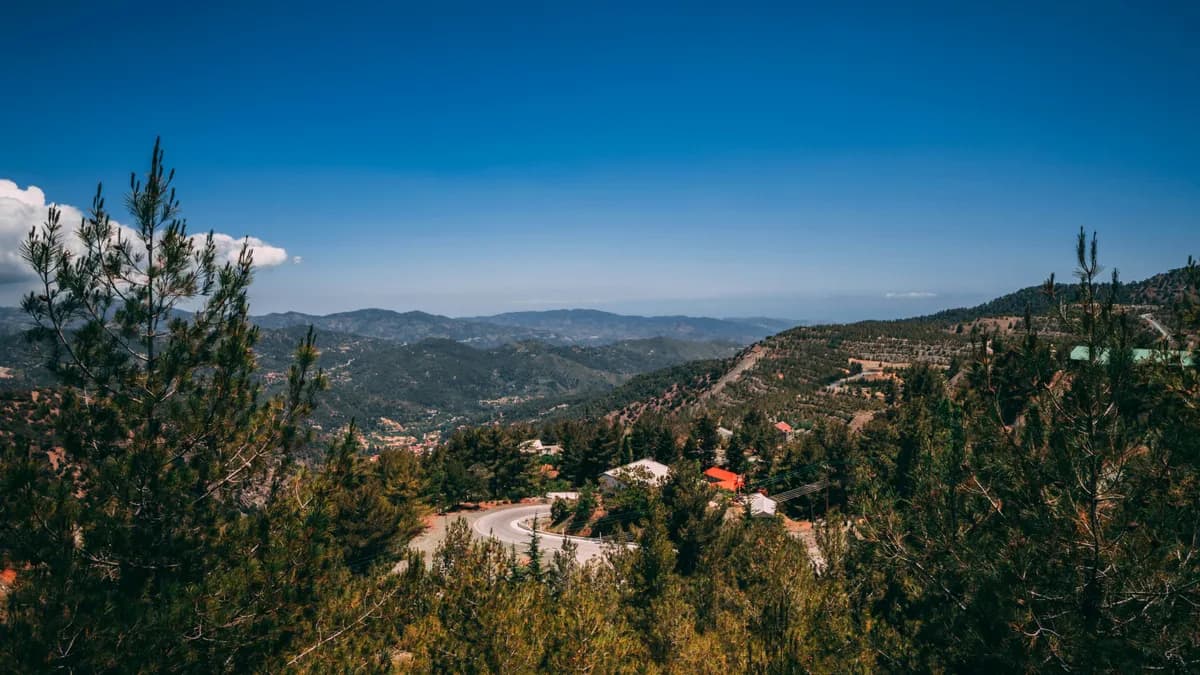
Troodos Mountains
This guide covers Troodos Mountains. Explore more about this destination.
View DestinationAbout the Author
Alex Borshch
Founder and editor of the Isla365 network. Spent six months living in the Dominican Republic over the 2013-14 winter, and has since wintered in Thailand, Vietnam and Turkey. Writes and edits the guides across the network.