Cyprus on a Budget: Money-Saving Tactics for 2026
Practical ways to cut costs in Cyprus: shoulder-season timing, the public buses, self-catering, free beaches and sites, and where locals eat for a few euros.
Cyprus has a reputation as a sunshine package destination, which makes it easy to assume it is expensive. It does not have to be. The Republic of Cyprus (the government-controlled south) runs on the euro, the public bus network is genuinely cheap, most beaches and many ancient sites cost little or nothing, and a filling lunch can be a few euros if you eat where locals eat. This guide covers the practical decisions that keep costs down without making the trip feel like a compromise.
When to go: shoulder season saves the most
The single biggest lever on your budget is timing. July and August bring peak heat, peak crowds and peak prices for flights, hotels and car hire. The shoulder months, roughly April to early June and September to October, give you warm days, swimmable sea and noticeably lower costs. October still sees sea temperatures around 25C, and flights in autumn commonly run well below the August figure. May is mild and uncrowded, with the sea warming through the low 20s.
Winter (November to March) is cheaper still and fine for sightseeing, hiking and city breaks, though the sea is cold and some coastal resorts in Ayia Napa and Protaras wind down. If beach time is the point, aim for the shoulder months. If you mainly want ancient sites, food and walking, winter is the value pick.
Getting around: public buses, not taxis
Cyprus drives on the left and has no passenger rail, so the choice is buses, a hire car or taxis. Taxis are the budget killer here. The public bus network, by contrast, is one of the cheapest in the EU. As a rough guide based on 2026 fares:
| Service | Typical fare |
|---|---|
| Urban single with Cyprus Public Transport, paid in cash to the driver | EUR 2.70 |
| Urban single, tapped with a Motion card (a rural or feeder leg is charged separately and costs less) | EUR 2.00 |
| Intercity single (e.g. Larnaca to Nicosia) | around EUR 4.00 to 5.00 |
| Intercity adult single (longer, e.g. Nicosia to Paphos) | EUR 8.00 |
Buy single tickets from the driver with cash, or pick up a reloadable Motion bus card at a point of sale (around EUR 5.00 for the card) to top up and tap on, which works out a little cheaper per ride than paying cash. Always confirm current fares with the operator, since prices are revised periodically. Intercity coaches link the main towns of Paphos, Limassol, Larnaca and Nicosia, while local urban buses run frequently along the coast and out to the airports. A day pass quickly pays for itself if you are hopping between beaches and the town centre.
If you do hire a car to reach places buses do not serve well (the Troodos mountains, the Polis and Latchi area, or the Akamas), split the rental and fuel across a group and book it for only the days you need it rather than the whole trip. Many budget travellers do bus-based town stays plus one or two car days for the interior.
Where to stay: self-catering over half-board
Self-catering apartments and studios are the budget backbone of a Cyprus trip. A kitchen lets you skip the marked-up hotel breakfast and the daily restaurant dinner, both of which add up fast over a week. Stock up at a local supermarket: Cypriot produce, bread, halloumi, olives, tomatoes and fruit are inexpensive and make easy breakfasts and lunches.
For location, staying slightly back from the absolute seafront usually cuts the nightly rate while keeping you a short walk or cheap bus ride from the water. In Larnaca you can base yourself near Finikoudes Beach and walk to most things; in Paphos the harbour and old town are bus-connected; in Limassol the old town sits inland from the promenade and tends to be cheaper than the marina.
Free and cheap things to do
This is where Cyprus shines for a tight budget. The coastline is public, and many of the best beaches cost nothing to use beyond a sunbed if you want one (bring a towel and you pay zero):
- Nissi Beach and Makronissos Beach near Ayia Napa for soft sand and shallow water.
- Fig Tree Bay and Konnos Bay on the Protaras side.
- Coral Bay near Paphos, and the dramatic, free-to-visit Petra tou Romiou (Aphrodite's Rock) between Paphos and Limassol.
- Governor's Beach with its white cliffs, an easy day out from Limassol.
Nature areas are free to walk. The Cape Greco park has cliff paths, sea caves and snorkelling spots; the Akamas peninsula offers wild coast and trails (the Avakas Gorge hike costs nothing); and the Troodos forest has marked nature trails for mountain hiking with no entry fee. At Larnaca Salt Lake you can watch flamingos for free in winter and early spring.
Cyprus's headline ancient sites are state-run and inexpensive, generally a few euros per adult, with reductions or free entry for under-18s and seniors at many of them. For a small spend you can see:
- The mosaics of Paphos Archaeological Park and the nearby Tombs of the Kings, both UNESCO-listed.
- Ancient Kourion above Limassol, with a Greco-Roman theatre over the sea, and medieval Kolossi Castle close by.
- The Neolithic settlement at Choirokoitia, another UNESCO site.
Walking the historic centres costs nothing. Wander Nicosia old town inside the Venetian walls, the lanes of stone-built Omodos village in the wine country, and the churches of the coast, including the Church of Saint Lazarus in Larnaca. Many monasteries, such as Kykkos Monastery in the Troodos, are free to enter.
Eating cheap and eating well
You do not need a tourist taverna to eat well in Cyprus. The cheapest reliable meals come from grill houses and bakeries:
- Souvlaki and pita. A pork or chicken souvla-style skewer wrap, or a small sheftalia sausage in pita with salad, is one of the best value hot meals on the island. Order it to go from a local grill house rather than a seafront terrace.
- Bakeries (fournos). Cypriot bakeries sell cheese pies, flaounes, olive bread, spinach pastries and fresh loaves for a fraction of restaurant prices. A bakery breakfast plus fruit from a market is a couple of euros.
- Halloumi and lountza. Grilled halloumi and smoked lountza pork are cheap to buy from a supermarket and easy to cook in a self-catering kitchen.
When you do want a sit-down meal, a meze can be good value shared between a group, and many tavernas inland (in the wine villages near Limassol or in Troodos) charge less than the coastal resorts for the same dishes such as kleftiko, afelia and stifado. Tap water is generally fine in most areas, which saves on bottled water; carry a refillable bottle. House wine and the local Keo or Leon beers are cheaper than imported brands.
Small habits that keep the total down
- Carry some cash. Small grill houses, bakeries and bus drivers prefer it, and you avoid card minimums.
- Use the 112 emergency number only for real emergencies; for routine help, English is widely spoken, so you rarely need paid services to get directions or advice.
- Bring a UK-style type G plug adapter (230 to 240V) rather than buying one locally.
- Plan beach days around the bus timetable so you are never tempted into a costly taxi back.
- Visit free natural sites (gorges, capes, the salt lake, Aphrodite's Rock) on the days you are not paying for a car, and cluster the ticketed ancient sites into a single car day to spread the rental cost.
Put these together and Cyprus becomes an affordable destination rather than an expensive one. Shoulder-season flights, a self-catering base, the public bus network, free beaches and bakery-and-grill eating do most of the heavy lifting. Spend selectively on the things that are genuinely worth it, the UNESCO ancient sites, a boat trip, a meze with a group, and let the rest of the island be the free pleasure it largely is.
Frequently Asked Questions
When is the cheapest time to visit Cyprus?
Winter, from November to March, is the cheapest window, though the sea turns cold and some coastal resorts in Ayia Napa and Protaras wind down. For a balance of low cost and warm, swimmable sea, the shoulder months of April to early June and September to October work best: October still has sea temperatures around 25C, and autumn flights commonly run well below the August price. July and August bring the highest flight, hotel and car hire prices of the year.
Is it cheaper to use public buses or hire a car in Cyprus?
Public buses are far cheaper than taxis and, for most of a trip, cheaper than a hire car too. With Cyprus Public Transport, an urban single runs EUR 2.70 in cash or EUR 2.00 with a reloadable Motion card, and a rural or feeder leg is charged separately at a lower rate, and intercity coaches connect Paphos, Limassol, Larnaca and Nicosia for a few euros more. A hire car is worth it mainly for reaching the Troodos mountains or the Akamas, and splitting the cost across a group for only the days you need it keeps it affordable.
How much does public transport cost in Cyprus?
With Cyprus Public Transport, an urban single runs EUR 2.70 paid in cash to the driver, or EUR 2.00 tapped with a reloadable Motion card, which costs EUR 5.00 to buy; a rural or feeder leg is charged separately and costs less. Intercity fares cost more: roughly EUR 4.00 to 5.00 for a route like Larnaca to Nicosia, and EUR 8.00 adult one way for a longer route such as Nicosia to Paphos. Fares are revised periodically, so confirm the current price with the operator before you travel.
Are the beaches in Cyprus free?
Yes. The coastline is public, and most of the best beaches cost nothing to use if you bring your own towel rather than renting a sunbed. Free options include Nissi Beach and Makronissos Beach near Ayia Napa, Fig Tree Bay and Konnos Bay on the Protaras side, Coral Bay near Paphos, the dramatic Petra tou Romiou (Aphrodite's Rock), and Governor's Beach with its white cliffs near Limassol.
How much do ancient sites and attractions cost in Cyprus?
Cyprus's headline ancient sites are state-run and inexpensive, generally a few euros per adult, with reductions or free entry for under-18s and seniors at many of them. That covers sites such as Paphos Archaeological Park, the Tombs of the Kings, Ancient Kourion, Kolossi Castle and the Neolithic settlement at Choirokoitia. Historic centres, monasteries such as Kykkos, and nature areas like Cape Greco and the Akamas peninsula cost nothing at all to walk.
What is the cheapest way to eat in Cyprus?
Grill houses and bakeries beat restaurants on price. A souvla-style skewer wrap or a sheftalia sausage in pita from a local grill house is one of the best value hot meals on the island, and bakeries (fournos) sell cheese pies, flaounes, olive bread and pastries for a fraction of restaurant prices. Buying halloumi and lountza from a supermarket to cook in a self-catering kitchen is cheaper still, and tap water is generally fine, which saves on bottled water.
Is self-catering cheaper than a hotel in Cyprus?
Self-catering apartments and studios are the budget backbone of a Cyprus trip because a kitchen lets you skip the marked-up hotel breakfast and a restaurant dinner every night, both of which add up over a week. Stocking up on Cypriot produce, bread, halloumi, olives, tomatoes and fruit from a supermarket makes cheap breakfasts and lunches. Staying slightly back from the seafront also tends to lower the nightly rate while keeping the beach a short walk or bus ride away.
What are simple ways to keep daily costs down in Cyprus?
Carry cash, since small grill houses, bakeries and bus drivers prefer it, and plan beach days around the bus timetable so you are never tempted into a costly taxi. Cluster the ticketed ancient sites into a single car hire day to spread the rental cost, and use free natural sites, gorges, capes, the salt lake and Aphrodite's Rock, on the days you are not paying for a car. Bring your own UK-style plug adapter rather than buying one on arrival.
Wondering what things actually cost before you commit? Our real 2026 Cyprus price breakdown lists euro figures for meals, hotels, buses and activities, tier by tier.
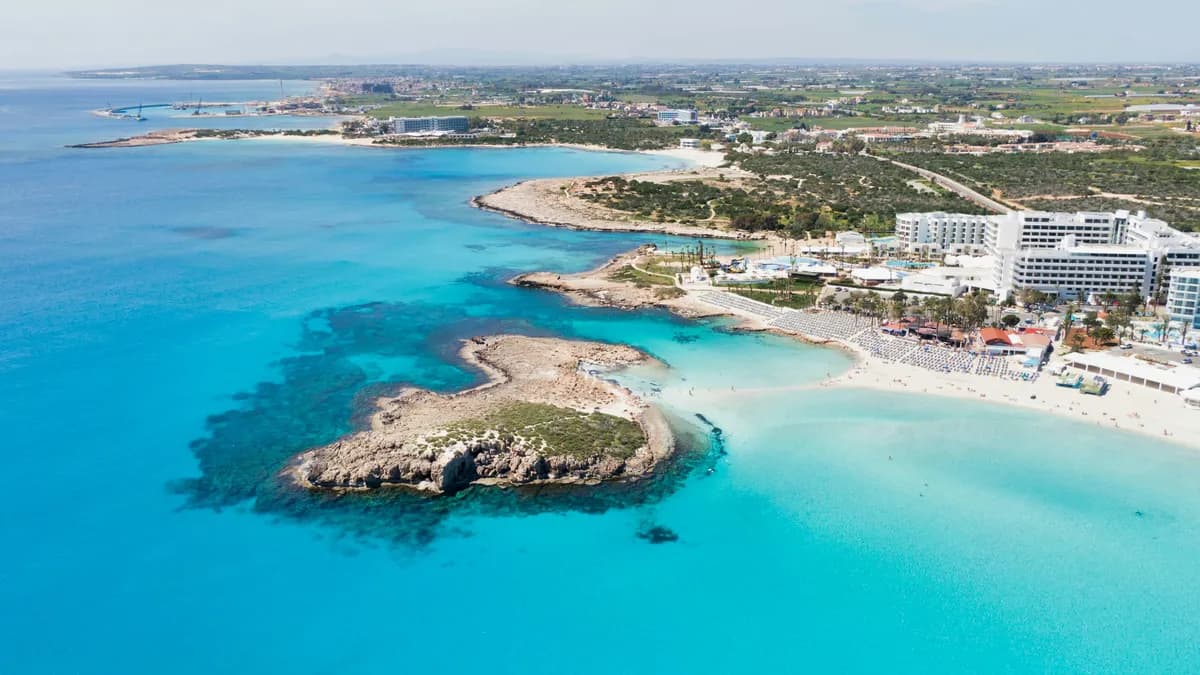
Ayia Napa
This guide covers Ayia Napa. Explore more about this destination.
View DestinationAbout the Author
Alex Borshch
Founder and editor of the Isla365 network. Spent six months living in the Dominican Republic over the 2013-14 winter, and has since wintered in Thailand, Vietnam and Turkey. Writes and edits the guides across the network.